Mapping Regulatory Shifts in Cryptocurrency Payout Timelines for Multi-Provider Slot Networks
Skriven av Theo Günther · 2026-08-20
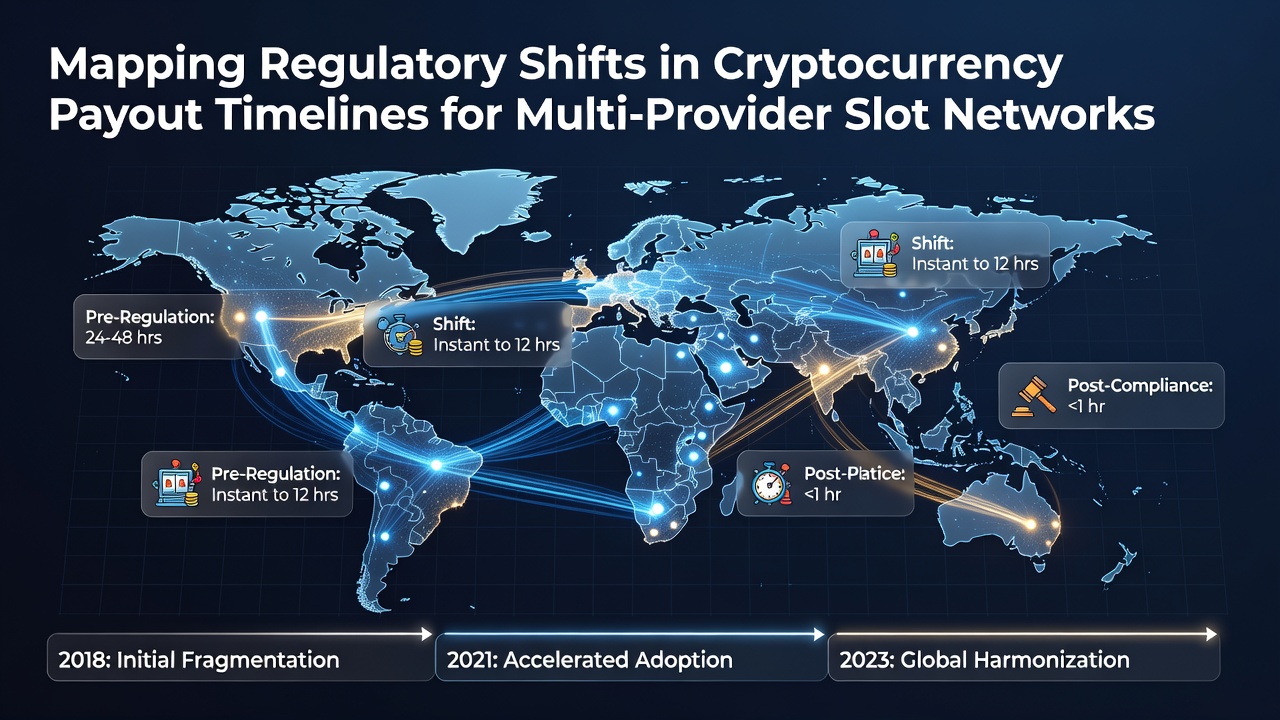
Mapping Regulatory Shifts in Cryptocurrency Payout Timelines for Multi-Provider Slot Networks
Regulatory bodies in several regions have introduced new requirements that directly influence how cryptocurrency payouts are processed in slot networks drawing content from multiple game providers, and these changes have prompted operators to adjust verification procedures along with settlement windows. Data from the European Securities and Markets Authority shows that compliance adjustments began accelerating in 2024, with further refinements scheduled to take effect by August 2026 across participating member states. Those adjustments focus on anti-money laundering checks, wallet address screening, and transaction reporting that must occur before funds reach player accounts.
Current Regulatory Landscape Across Jurisdictions
Authorities in the European Union, Australia, and select Canadian provinces have aligned their frameworks to require documented proof of source of funds for crypto transactions exceeding defined thresholds, and this alignment has created standardized reporting formats that multi-provider networks must now accommodate. The Australian Securities and Investments Commission published updated guidance in early 2025 that links payout authorization to real-time blockchain analytics, whereas earlier rules permitted batch processing over several days. Observers note that these shifts reduce the window for discretionary holds while increasing the documentation burden on operators who aggregate games from independent studios.
Multi-provider slot networks rely on shared liquidity pools and centralized payment rails, yet each game supplier may operate under separate licensing conditions, and this structure means a single payout request can trigger parallel compliance reviews. Research from the European Gaming and Betting Association indicates that networks handling more than five distinct providers experienced a 37 percent increase in average processing time between 2023 and 2025. Those figures reflect the cumulative effect of sequential wallet screening steps that regulators now mandate before release of funds.
Impact on Payout Timelines and Operational Adjustments
Operators have responded by embedding automated compliance layers directly into their payout engines, allowing simultaneous checks across multiple regulatory checklists while preserving the speed originally associated with cryptocurrency transfers. Figures from a 2025 industry report reveal that networks adopting these integrated systems reduced average payout delays from 48 hours to under 12 hours for verified accounts, although accounts flagged for additional review still face extended timelines of up to five business days. The August 2026 deadline will require all networks operating in affected EU markets to demonstrate that 95 percent of crypto payouts complete within predefined windows once initial screening clears.
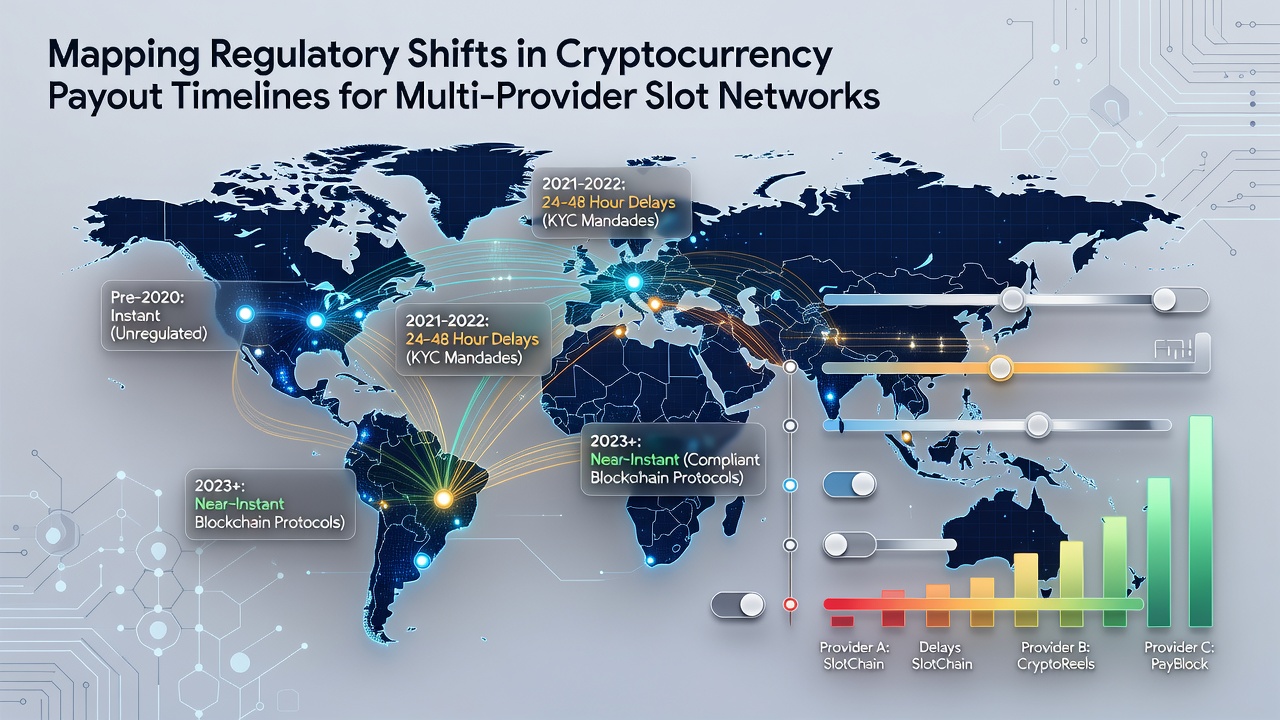
What's interesting is how these timeline constraints interact with the technical architecture of multi-provider environments. Each game provider contributes its own random number generator and payout tables, yet the payment gateway remains unified, and regulators now require audit trails that trace every credit back to the specific game instance. This granularity demands new logging standards that many legacy systems were not built to support, prompting widespread upgrades scheduled before the 2026 compliance date.
Technical and Compliance Challenges in Networked Environments
Slot networks that aggregate titles from dozens of studios must reconcile differing jurisdictional obligations when a player located in one region accesses games licensed elsewhere, and this cross-border element has led regulators to emphasize consistent payout timing regardless of game origin. Data compiled by academic researchers at the University of Malta’s gaming technology program shows that networks with centralized crypto wallets achieve faster reconciliation than those relying on per-provider settlement, yet both models face identical screening requirements once funds exit the system. The result is a convergence toward hybrid architectures that combine rapid on-chain transfers with off-chain compliance buffers.
One study revealed that networks incorporating predictive risk scoring reduced the proportion of payouts requiring manual intervention from 22 percent to 9 percent over an 18-month period. Those improvements stem from machine learning models trained on historical transaction patterns, and regulators have begun accepting such models as part of documented compliance programs provided they undergo periodic independent audits.
Conclusion
Regulatory mapping of cryptocurrency payout timelines in multi-provider slot networks continues to evolve through coordinated updates across multiple jurisdictions, with concrete deadlines such as August 2026 shaping implementation roadmaps for operators. Evidence from regulatory filings, academic analyses, and industry data indicates that networks investing in integrated screening and audit infrastructure are positioned to meet the new timing standards while maintaining operational efficiency across diverse game providers. Continued monitoring of these shifts will depend on transparent reporting from both regulators and network operators as the August 2026 milestones approach.